Showing posts with label nonfiction. Show all posts

Monday, January 5, 2026

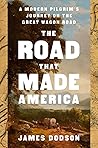
The Road that Made America

The Road That Made America: A Modern Pilgrim's Journey on the Great Wagon RoadThe Road That Made America: A Modern Pilgrim's Journey on the Great Wagon Road by James Dodson
My rating: 5 of 5 stars

This is a book of history, a travelogue, and a memoir, all mixed together into a very readable and super-informative story about early America.
"Little known today, the Great Wagon Road was the primary road of frontier America: a mass migration route that stretched more than eight hundred miles from Philadelphia to Augusta, Georgia. It opened the southern frontier and wilderness east of the Appalachian mountains to America's first settlers, and later served as the gateway for the exploration of the American West. In the mid-1700s, waves of European colonists in search of land for new homes left Pennsylvania to settle in the backcountry of Maryland, Virginia, and the Carolinas." --flap copy
Dodson was an excellent companion for a modern-day journey along this historic route. His writing reminded me of John McPhee and John Gierach, which I really like. I learned a lot about the history of Pennsylvania and am inspired to check out the Pennsylvania Trails of History at some point. 

Thursday, December 19, 2024

Mastering AI

Mastering AI: A Survival Guide to Our Superpowered FutureMastering AI: A Survival Guide to Our Superpowered Future 
by Jeremy Kahn
My rating: 5 of 5 stars

"Too often we mistakenly view technological development as deterministic, as if technology were a force of nature immune to our actions. This attitude robs us of agency and turns us into mere subjects. It is a dehumanizing pose, for one of our defining characteristics as a species is our ability to bend the world to our favor. And AI is bendable. It is a protean technology. We can still sculpt its final form. The decisions we make, individually and collectively, over the next few years will determine AI's fate, and our own. If we do nothing, humanity is careening toward a cliff edge; the fall may not doom us all, but it will injure us in countless ways We can act now to avoid the precipice and steer toward a brighter future that AI will help deliver. In trying to pull off this maneuver, our greatest impediment is not AI. It's us." (p. 245-6)
This book is both terrifying and encouraging. Kahn looks at how AI is developing, what it actually is and can do right now, and what it could become (good and bad). I found the deep dives into specific areas where AI is being developed, such as education, especially fascinating. Kahn is not giving us an objective view of AI, he has a very definite message about the dangers it poses and the opportunities it offers if we (both individually and as a species) can harness this technology instead of letting it harness us. 

I rarely feel like any book is one "everyone should read," but this one is an exception.

Sunday, November 10, 2024

NonFiction November 2024 - Week 2


Week 2 of Nonfiction November is hosted at Volatile Rune. Technically week two ended on 11/8, but I am ignoring that fact and posting about it anyway. 

Before I answer the prompt I encourage you to go read the host post at Volatile Rule which talks about the freedom to read. I totally agree with what Frances has to say. It is an important message we should all be thinking about. Please read it.

Q: What are you looking for when you pick up a nonfiction book? 

A: When I pick up a book I am looking for good writing that fits the subject matter; to learn something I didn't know, or think about something in a new way; and to enjoy the reading experience. I'm looking for these same things regardless of fiction or nonfiction.

Q: Do you have a particular topic you’re attracted to? 

A: There are some topics that consistently appeal to me: biography (esp. of writers and powerful women), personal finance, organization and project management, history of specific things (bananas, board games, brewing, etc.). Almost anything might jump out at me from the library shelves though and pique my interest. 

Q: Do you have a particular writing style that works best? 

A: The writing needs to match the topic--a light airy tone is great for a memoir about doing everything Oprah suggests for a year, but a serious, scholarly tone is called for with a history of Islam. 

Q: When you look at a nonfiction book, does the title or cover influence you? If so, share a title or cover which you find striking.

A: I don't think covers have a big influence on my book choices. 


Wednesday, October 30, 2024

NonFiction November 2024 - Week 1


This first week of NonFiction November is being hosted at Based on a True Story. This week's questions are what NF have we read this year and what were our favorites?

I have read 78 books so far this year and 30 of them were nonfiction. Mostly I read books about productivity, a little history, and some memoir/biography. 

As far as favorites these were the standouts:

Congratulations! The Best is Over by R. Eric Thomas -- funny and touching memoir and the audiobook, read by the author, was great.

The Life List by Kate Christie -- a woman of "a certain age" taking control of her own destiny and nailing it!

All it Takes is a Goal by Jon Acuff -- sensible, practical tools for getting stuff done.

Boom Town by Sam Anderson -- a true story of Oklahoma City and basketball.

As always, I hope to discover some new-to-me NF titles and learn more about ones I might have been considering that are not likely to be good picks for me.


Saturday, February 10, 2024

I Think You're Wrong (But I'm Listening)

I Think You're Wrong (But I'm Listening): A Guide to Grace-Filled Political ConversationsI Think You're Wrong (But I'm Listening): A Guide to Grace-Filled Political Conversations 
by Sarah Stewart Holland and Beth Silvers
My rating: 4 of 5 stars

I found this book to be thought provoking and filled with useful questions to consider about how my actions and beliefs affect the conversations I have about politics. 

One of the things the authors talk about here is the importance of bringing your whole self--beliefs, experiences, values--to your political conversations and allowing others to do the same. We are not talking to "political positions" but to actual complex people. I was struck by the fact that my experience of reading this book was an opportunity to exercise this skill. The authors are both Christian women whose faith is a big part of who they are. This is very much a part of the way they view the world and how they approach conversations. At first I was a bit put off by all the faith-based parts of the book, but as I read I came to see that they brought value and nuance to the points being made. I had been reassured that these were women I wanted to hear from early on (page 18 to be exact) when the phrase "Because you cannot have too much Abigail Adams..." was used.

Another part that really resonated for me was the chapter 'Find Your Why' where Simon Sinek is quoted:
"For values or guiding principles to be truly effective they have to be verbs. It's not 'integrity,' it's 'always do the right thing.' It's not 'innovation,' it's 'look at the problem from a different angle.' Articulating our values as verbs gives us a clear idea--we have a clear idea of how to act in any situation."
The divisiveness that has infected our country is a huge problem that cannot be solved with a single book. I recommend this book, however, as an excellent way to consider how you are personally contributing to the divisions or helping to bridge them.

Sunday, May 14, 2023

Islam: A Short History

Islam: A Short History (Modern Library Chronicles)Islam: A Short History
by Karen Armstrong
My rating: 4 of 5 stars

"Religion, like any other human activity, is often abused, but at its best it helps human beings to cultivate a sense of the sacred inviolability of each individual, and thus to mitigate the murderous violence to which our species is tragically prone. Religion has committed atrocities in the past, but in its brief history secularism has proved that it can be just as violent. As we have seen, secular agression and persecution have often led to a heightening of religious intolerence and hatred." (p. 180)
The history of Islam, which is very tightly linked with the political history of numerous tribes and countries, is very complicated. Armstrong does an excellent job of sorting everything out into a clear narrative. The book also includes an extensive bibliography, a list of key people in Islamic history, and both definitions and pronunciation guides for Arabic words. 

Thursday, February 2, 2023

The Story of Philosophy

The Story of Philosophy: The Lives and Opinions of the World's Greatest PhilosophersThe Story of Philosophy: The Lives and Opinions of the World's Greatest Philosophers 
by Will Durant
My rating: 3 of 5 stars

This book was written in the 1920s which wasn't an issue until I got to the "contemporary" philosophers and then it was a bit weird. Western philosophy is discussed one thinker at a time, with reference back to earlier philosophers who were influences or whom the subject is refuting. Durant uses a lot of quotes from the individual philosophers, but offers a lot of guidance and context so his reader doesn't get lost. I don't feel like I understand all the arguments I read here, but I definitely have a better understanding of who's who in the tradition of Western philosophy.
This book is on my Classics Club list and on my 2023 TBR pile challenge list. 


Monday, November 28, 2022

NFN: New to my TBR


Week 5: (November 28-Dec 2)
 – New to My TBR : It’s been a month full of amazing nonfiction books! Which ones have made it onto your TBR? Be sure to link back to the original blogger who posted about that book! This week our host is The OC Book Girl.

  1. A Shortest History of the Soviet Union by Sheila Fitzpatrick and A Short History of Russia: From the Pagans to Putin by Mark Galeotti (both from Brona's Books)
  2. Pastrami on Rye: An Overstuffed History of the Jewish Deli by Ted Merwin (Plucked from the Stacks) 
  3. Wild Women and the Blues (the novel paired with a NF title at Based on a True Story)
  4. How to Keep House While Drowning: A Gentle Approach to Cleaning and Organizing by KC Davis (paired by Melissa Firman with The Lazy Genius Way which I liked) 
  5. 16 Words: William Carlos Williams & “The Red Wheelbarrow” by Lisa Rogers and Chuck Groenink (a NF picture book paired with the poetry of WCW by Plucked from the Stacks)
  6. Abandoned Train Stations by David Ross (Superfluous Reading)
  7. Both titles in this pairing from Beverley A Baird appealed to me: The Cartographers by Peng Shepherd (a novel) and the NF work The Map Thief 
  8. The Divorce Colony by April White (Based on a True Story)
  9. The Age of Creativity by Emily Urguhart by Michael Blanding (Beverley A Baird)

From last year's list--still TBR:

  1. The Art of the English Murder: From Jack the Ripper and Sherlock Holmes to Agatha Christie and Alfred Hitchcock by Lucy Worsley (from Joy's Book Blog)
  2. Index, a History of the by Dennis Duncan (from Books Please)
  3. Vote First or Die by Scott Conroy (from Plucked from the Stacks)
  4. The Adventures of Miss Barbara Pym by Paula Byrne (from Entering the Enchanted Castle) 
  5. The Splendid and the Vile by Erik Larson (from Gulfside Musing) 
  6. Enid by Robert Wainwright (from book'd out -- though it was on their TBR as well rather than a recommendation)
  7. The Brontes: Wild Genius on the Moors: The Story of Three Sisters by Juliet Barker (from Doing Dewey)
  8. The Barbizon by Paulina Bren and The Girl in White Gloves by Kerri Maher (a pairing from The Paperback Princess)
  9. Murder Your Darlings by Roy Peter Clark (from LisaNotes)
  10. The Moralist: Woodrow Wilson and the World He Made by Patricia O'Toole (recommended in a comment from Lory at Entering the Enchanted Castle)
  11. Off the Clock by Laura Vanderkam (from The Book Stop)
  12. Alone in the Kitchen with an Eggplant (from What's Nonfiction) -- essays from various people about eating/cooking for one

Thursday, November 24, 2022

Biography: Fiction, Fact & Form

Biography: Fiction, Fact & FormBiography: Fiction, Fact & Form 
by Ira B. Nadel
My rating: 3 of 5 stars

This volume is essentially a collection of six essays on various aspects of biography as a literary form. I found it thought-provoking and in sections very interesting. The tone of the writing is very academic which made it rather slow going. One of the essays looks at the various approaches biographers have taken in writing lives of George Eliot which was a good way to really see the choices that are being made by the authors of biography.
"Nonetheless, when a biographer recognizes that the life he writes is in itself and aesthetic construct involving fictions, imagery, style and narration, parallel to the inner life of his subject, itself a fiction, the result may be a biography that is at the same time literary and truthful. It will also reflect the ambiguous, self-contradictory, illogical individual that is its subject." (p. 118)
When he wrote this book Ira B. Nadel was a professor at the University of British Columbia, Vancouver.  He is the author of multiple biographies in addition to this study of the form. I am counting this book toward the Canadian Reading Challenge.


Friday, November 11, 2022

NFN: Book Pairing

Week 2: Book Pairing: This week, pair up a nonfiction book with a fiction title (or another nonfiction!). It can be a “If you loved this book, read this!” or just two titles that you think would go well together. Maybe it’s a historical novel and you’d like to get the real history by reading a nonfiction version of the story. Or pair a book with a podcast, film or documentary, TV show, etc. on the same topic or stories that pair together. Our Nonficton November host this week is What's Nonfiction? 


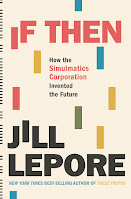
In If Then Jill Lepore takes us through the history of the Simulmatics Corporation which was a social science technology firm active in politics (and other things) in the 1960s. She pulls in all kinds of interesting history about presidential election campaigns, Vietnam, and the culture of the period.

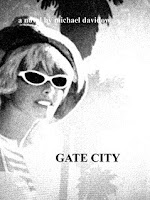
Gate City by Michael Davidow is a work of historical fiction centering on the victory of John F. Kennedy over Richard Nixon in 1960. This novel is the first volume of the Henry Bell trilogy (Split Thirty and The Rocketdyne Commission are the other titles). All 3 novels would make a wonderful companion read to Lepore's history book as they are set in the same social milieu and considering very similar issues. 


Wednesday, November 2, 2022

NFN: My Year in Nonfiction


Nonfiction November is kicking off (as is traditional) with a look back at the year so far. This first week is hosted at DoingDewey and you can see everyone's responses there. 

I have read 38 nonfiction titles so far this year, across a variety of genres. I had set myself a goal of reading 25 nonfiction titles this year so I am pleased. Last #NonFicNov I compiled a list of TBRs and have read (or began and DNF) 7 of those. 

The books from this year's reading that stand out for me as favorites are Uncommon Carriers by James McPhee and Ninety Nine Glimpses of Princess Margaret by Craig Brown.

I have been reading quite a few books about Readers' Advisory for a project at work and have also read quite a bit of self-help and biography. No one topic has dominated though. 

The nonfiction book I have recommended the most is probably The Lazy Genius Kitchen by Kendra Adachi which is entertaining, encouraging, and full of good solid advice on making your life in the kitchen work better for you (not some imaginary perfect person whose containers always have lids that they can actually find).

I'm looking forward to Nonfiction November as a chance to think back on what I have read and to learn about new-to-me titles from other readers. 

For an overview of Nonfiction November check out the planning post. 


Tuesday, October 4, 2022

Challenge Check-in: Nonfiction Reader Challenge

In hopes of completing my various reading challenges by the end of the year I will be posting check-ins this week on the various challenges and what I have left to read if I am going to complete them. 


The 2022 Nonfiction Reader Challenge has 12 categories and the idea is to read one nonfiction book for each of them, or to read any 12 nonfiction books.  I decided to participate as a "grazer" and set my own goal which was to read 12 books, but not necessarily in the defined categories.

These are the categories for which I have read books:

Social History: I read two books that fit this category Blizzard of Glass by Sally M. Walker and 99 Glimpses of Princess Margaret by Craig Brown and am counting both toward this challenge.

Popular Science: The Disappearing Spoon by Sam Kean

Language: Living with a Dead Language by Ann Patty

Celebrity: I am counting two books that fit this category Blowing the Bloody Doors Off by Michael Caine and Canada by Mike Meyers.

Published in 2022: The Power of Regret by Daniel H. Pink

I have completed 7 books so far and need to read 5 more. Or I need to designate other non-fiction books I already read this year as "wildcards" for this challenge.

These are the categories for which I haven't read/designated a book:

Thursday, July 28, 2022

Burning Questions

Burning Questions: Essays and Occasional Pieces, 2004 to 2021Burning Questions: Essays and Occasional Pieces, 2004 to 2021 
by Margaret Atwood
My rating: 4 of 5 stars

This volume is a collection of essays, speeches, and book introductions written by Atwood in the beginning of the 21st century. Quite a few of the pieces are about nature, politics, and environmental issues; in Atwood's capable hands these are clear statements of her positions, but they don't feel like diatribes. I most enjoyed the pieces where she is talking about how other of her own works came into being. One of these is "The Writing of the Testaments" which was a fascinating glimpse into her mind regarding this sequel to The Handmaids' Tale. 
"As Thomas King has remarked, history isn't what happened--it's the stories we tell about what happened. How we interpret and present what happened. And that interpretation and presentation is always taking place in the now of the speaker or interpreter because where else can it take place? Therefore the past as we know it is always changing. Some parts of it are buried, but then dug up again. Some are spun positively, and then spun negatively. Statues are erected to admired or important figures, then they are pulled down."
This book is one of my 20 Books of Summer, and it also counts toward the Canadian Reading Challenge.


Monday, July 11, 2022

The Power of Regret

The Power of Regret: How Looking Backward Moves Us ForwardThe Power of Regret: How Looking Backward Moves Us Forward 
by Daniel H. Pink
My rating: 4 of 5 stars

I read Pink's book When a few years ago and really liked it so when I heard about this book I jumped right in. Pink conducted the World Regret Survey (which is still going on) and used the stories he collected there as a data set to analyze the role of regret in our lives. He identified correlations among the various regrets and addresses each type as well as talking about the implications of regret more generally. 
This was a thought-provoking book and Pink is an excellent writer. Mixing in people's personal stories with the social-science make this a very readable book.

Counts toward the Nonfiction Reader Challenge as a 2022 book.

Monday, July 4, 2022

99 Glimpses of Princess Margaret

Ninety-Nine Glimpses of Princess MargaretNinety-Nine Glimpses of Princess Margaret 
by Craig Brown
My rating: 4 of 5 stars

When I first picked up this book (at a library book sale I think) I thought it was a novel, and in some ways (having now read it) I think I was correct. Technically it is a biography of HRH the Princess Margaret (1930-2002), sister to Queen Elizabeth II. It was published in Britain under the title Ma'am Darling.

Rachel Cook, writing in The Guardian, said:
Brown has done something amazing with Ma’am Darling: in my wilder moments, I wonder if he hasn’t reinvented the biographical form. Subtitled 99 Glimpses of Princess Margaret, it is described by his publisher (which, infuriatingly, hasn’t given him an index) as “kaleidoscopic”. But this doesn’t do it justice. It is a cubist book, a collection of acute angles through which you see its subject and her world (and, to an extent, our world) anew.
I really liked the form of this book -- each chapter (or glimpse) is a self-contained view. Some are diary entries from various people who met PM, others are press clippings, lists of related things, narrative descriptions of events in her life (like you would expect to find in a biography). Some of the glimpses are fictional "what-ifs" presented as if they had happened: a marriage to Pablo Picasso, and PM becoming Queen of England. This multiplicity of viewpoints comes together into a fascinating portrait of a life lived in a very strange fishbowl.

The New York Times Review of this book concludes with what I think is an accurate depiction of what this book does:
"Without ever explicitly positioning Margaret for our pity, Brown reveals how we elevate in order to destroy. Who or what, in the final reckoning, is the true grotesque — the absurd, unhappy princess, those desperate to get close to her, or the system propping them all up?"
This was one of my 20 Books of Summer and I it counts toward the Nonfiction Reader Challenge in the category of "social history." I already have a book for that category however, so this one becomes one of my "wildcard" titles.


Sunday, June 5, 2022

The Disappearing Spoon


The Disappearing Spoon: And Other True Tales of Madness, Love, and the History of the World from the Periodic Table of the ElementsThe Disappearing Spoon: And Other True Tales of Madness, Love, and the History of the World from the Periodic Table of the Elements by Sam Kean
My rating: 3 of 5 stars

I enjoyed this book, and I learned quite a bit from it. There were definitely parts that I didn't totally understand, but overall the author did a very good job at explaining a lot of chemistry in a way that made sense. There were a lot of stories about the personalities involved in the development of the periodic table and the discovery of various elements and I found those parts the most interesting. 

This title counts toward the Nonfiction Reader Challenge in the 'popular science' category.


Sunday, April 24, 2022

Blizzard of Glass

Blizzard of Glass: The Halifax Explosion of 1917Blizzard of Glass: The Halifax Explosion of 1917 
by Sally M. Walker
My rating: 4 of 5 stars

"On December 6, 1917 two ships collided in Halifax Harbour. One ship was loaded top to bottom with munitions and one held relief supplies, both intended for wartorn Europe. The resulting blast flattened two towns, Halifax and Dartmouth, and killed nearly 2,000 people. As if that wasn't devastating enough, a blizzard hit the next day, dumping more than a foot of snow on the area and paralyzing much-needed relief efforts." --jacket copy
Written for a juvenile audience this book is based on extensive archival research and interviews with people who lived through the tragedy. It contains a lot of photographs from various archives and museums which enhance the historical record. The author focuses on several families who lived in the area, from a variety of backgrounds, and takes the reader through the individual experiences of those people along with the report of events in the harbor that led to the explosion. This is a horrifying event in Canadian history told with compassion and attention to human detail.

I am counting this book toward the Canadian Reading Challenge, and the Nonfiction Reader Challenge (as social history).


Wednesday, April 20, 2022

Shelf Control #5

Shelf Control is a weekly celebration of the unread books on our shelves created and hosted by Bookshelf Fantasies. Pick a book you own but haven’t read, write a post about it (suggestions: include what it’s about, why you want to read it, and when you got it), and link up! For more info on what Shelf Control is all about, check out the introductory post, Want to join in? Shelf Control posts go up every Wednesday.

Title: Beer School: Bottling Success at the Brooklyn Brewery
Author: Steve Hindy and Tom Potter

Published: 2005
Length: 288 pages (including index)

What it’s about (from back cover): "A journalist and a banker share the life and business lessons they learned while building a successful brewery in New York City."

How and when I got it: This is a very new addition to my shelves (last week) and it was a gift from a friend who is interested in the brewing industry.

Why I want to read it: I like books about NY, and about business, and I have heard that this is a really interesting look at the nuts-and-bolts of a brewery start-up. I also really like Brooklyn Brewery's beer. 

How it begins: "The Brooklyn Brewery is among the top 40 breweries in the United States, selling nearly 45,000 barrels of beer in 2004. With 17 years in business, the company has risen above many multinational giants to become the number six draft beer in New York City and a virtual institution in Brooklyn, a borough of more than 2 million inhabitants."

Wednesday, April 13, 2022

One Half of Robertson Davies

One Half of Robertson DaviesOne Half of Robertson Davies 
by Robertson Davies
My rating: 3 of 5 stars

My rating on this collection of essays is an average. Some pieces were 4-stars and some were 2. All the work in this volume began life as a speech and some of the ones that were dull to read might have been perfectly interesting to listen to; the section called "Masks of Satan." for example. "What Every Girl Should Know" was one of my favorites in the collection. It deals with enjoying life and was a speech given to students at a girls' school.
"Many people, and especially many young people, think that variety of sensation is what gives spice to life. They want to do everything, go everywhere, meet everybody, and drink from every bottle. It can't be done. Whoever you are, your energies and your opportunities are limited. Of course you want to try several alternatives in order to find out what suits you, but I hope that ten years from today you will agree with me that the good life is lived not widely, but deeply. It is not doing things, but understanding what you do, that brings real excitement and lasting pleasure." (p. 50)
There were also several pieces that discussed the novels of Charles Dickens and those were quite interesting. This title counts toward the Canadian Reading Challenge.


Friday, April 8, 2022

Readers' Advisory Guide to Nonfiction

The Readers' Advisory Guide to Nonfiction

The Readers' Advisory Guide to Nonfiction
by Neal Wyatt
My rating: 4 of 5 stars

I am continuing my readers' advisory reading project (see genre fiction, historical fiction, and mystery fiction). This was a really interesting volume in this series as nonfiction needs to be viewed through different frames than fiction for the purpose of providing readers' advisory services.  It seems obvious (at least it did to me) that subject matter would drive a readers' choices in nonfiction, but there is a lot more too it than that.

"The four intertwined aspects of nonfiction should be considered as individual elements that work collectively to determine the experience of reading. None of these elements stays neatly in a box all its own. Subject and type work in unison. Appeal wanders all over a book. The appeal elements blend into one another, affect one another, and affect narrative nature as well." (p. 22)

Here is my list of potential reading from this book: